
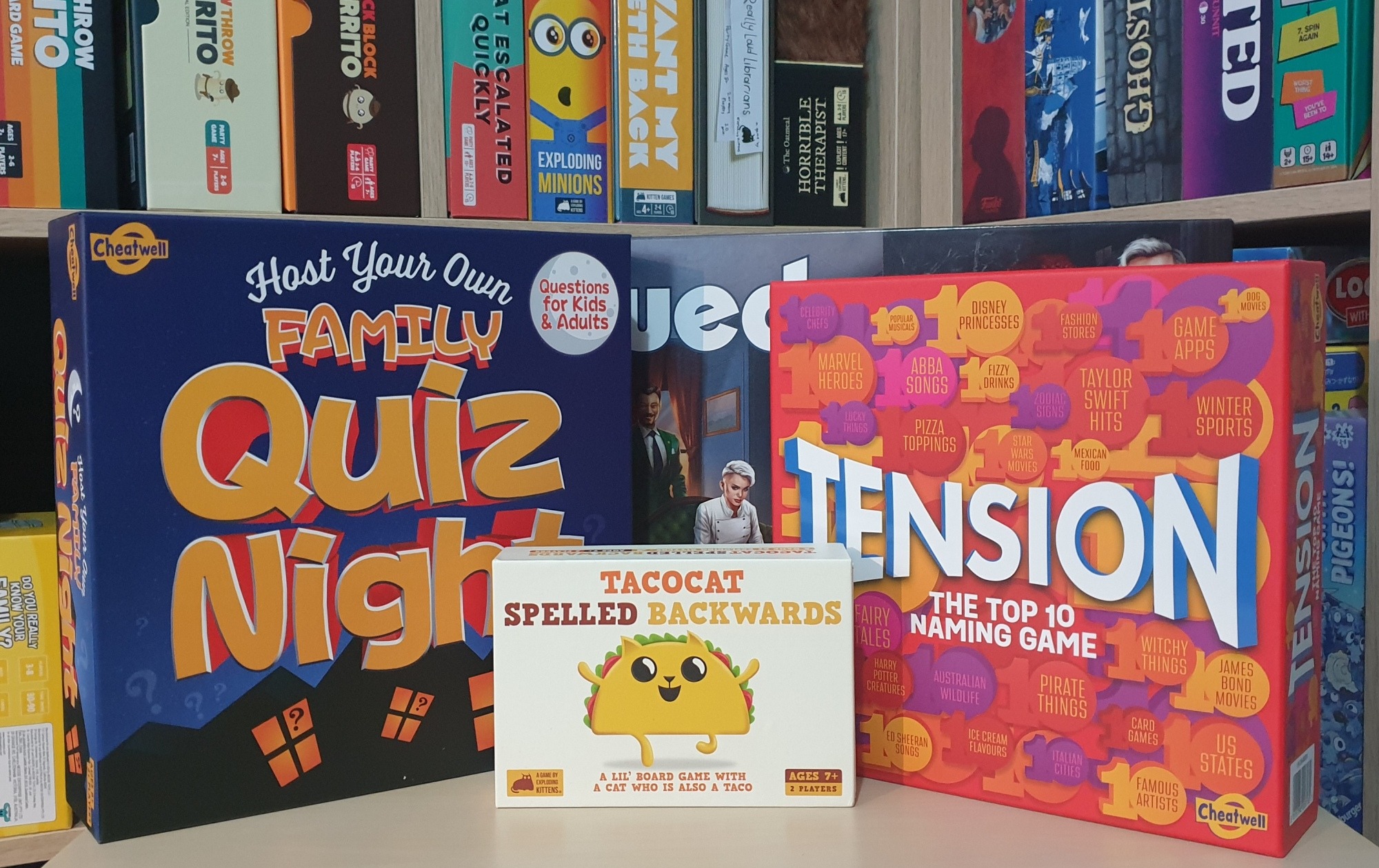
When it comes to board games there are many different genres, but when most people hear the phrase “family game,” they immediately picture bright boxes, cartoon artwork and rules so simple they can be explained in a single breath. A lot of people make the assumption that family games must be “kids’ games” – watered down, overly simple and designed to keep children entertained while adults politely endure the experience. But that is far from the truth as modern board games have changed dramatically and the best family games aren’t childish at all. They’re clever, inclusive and genuinely enjoyable for every age group at the table.
So when you are looking for games that the whole family can play together, remember that family games don’t need to be necessarily “kids games”. Children are far more capable, curious and engaged than many people give them credit for. When a game respects young players, offering meaningful choices, interesting themes and just the right amount of challenge, they rise to the occasion. Kids love feeling included in something that isn’t condescending, simplified beyond recognition or just so easy to play that that become bored. They want to play the games that the grownups are playing, not a lesser version of it. And when a game strikes that perfect balance, something magical happens: everyone at the table has fun, not just the youngest players. And it is the same for the adults, they don’t always want to be playing oversimplified games where they struggle not to win all the time (while children learning how to lose is a good thing, being beaten every single time can have a negative effect).
When it comes to games that the whole family can play together, one of the biggest misconceptions is regarding the complexity of the games. But in reality, a well-designed game can introduce strategy, decision making and problem solving in ways that feel natural and intuitive. Children learn through play, and they learn fast. Give them a game with clear goals, engaging mechanics and a theme they can connect with and they’ll surprise you with how quickly they grasp it. Many modern family games are built around this idea: simple to learn, but satisfying to master.
Another reason family games don’t need to be “kids’ games” is that shared enjoyment is what truly matters. A game that only entertains the children will leave the adults bored. A game that only entertains adults leaves children confused and disengaged. Both resulting in not much fun being had. But a game that sits comfortably in the middle, games that offer humour, challenge, co-operation and friendly competition, becomes a fun and enjoyable experience. These are the games that spark laughter, create memories and become part of family traditions. They’re the games that get requested again and again, not because they’re easy, but because they’re fun.
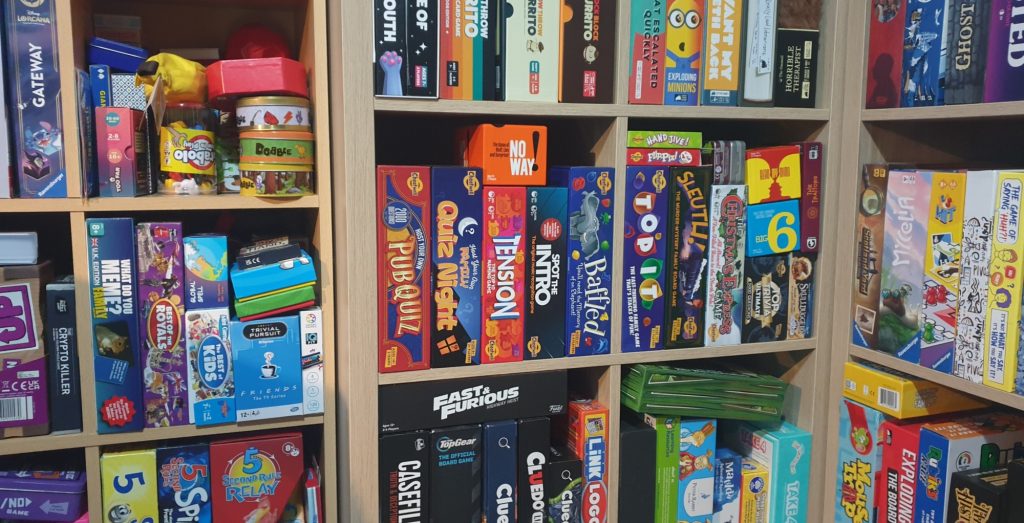
Co-operative games have transformed the family gaming landscape. Instead of pitting adults against children, a dynamic that can quickly become discouraging, co-operative games encourage teamwork. This type of game ensures that everyone wins together or loses together, levelling the playing field for all age groups and removes the pressure on younger players to “beat” more experienced ones. They are also fantastic for encouraging communication, problem solving and shared excitement. These games prove that family fun doesn’t require dumbing things down; it requires designing experiences that bring people together.
It’s also worth acknowledging that children enjoy depth in their games, just as must as the adults do. Younger players also love mysteries, puzzles, stories and to be challenged just as much as teenagers and adults. They also want to feel clever, capable and involved in the game (especially when they solve something the adults just can’t grasp). When a game offers them that opportunity, they engage more deeply and confidently. And when adults are equally invested, the experience becomes richer for everyone. The best family games treat children as full participants, not afterthoughts.
So when it comes to your family game nights, remember that family games don’t need to be “kids’ games” because families themselves aren’t one dimensional. As families are made up of different ages, personalities and playing styles, a great family game embraces that diversity and has something for everybody, young and old. These games offer choices for strategic thinkers, silliness for the playful ones and accessibility for younger players, creating a playing space where everyone feels included, respected and entertained.
In our digital world, as fun as it is, screens can far too often pull families in different directions, doing their own solitary thing, so board games offer a rare chance to gather, talk, laugh and connect. And the games that do this best aren’t the ones that talk down to children, they’re the ones that lift everyone up. So the next time you’re choosing a game for family night, don’t reach automatically for the “kids’ section” or even just the ones labelled as “family games”. Take a wider view and look for games that bring joy to every player at the table (you will know what will suit your family best). Those are the games that become memories and make nights enjoyable and something to look forward to every week.